
Sustainable Christmas gifts for kids: small choices, a clear conscience
You don't have to get everything right to buy sustainable Christmas gifts for kids. Choose toys that can take being played with and can be passed on to the next child, and check what the toy is made of and contains before you buy. It's the small choices that count.

Camilla Næristorp
- Founder, Loopyty
- 9 min read
With help from AI tools
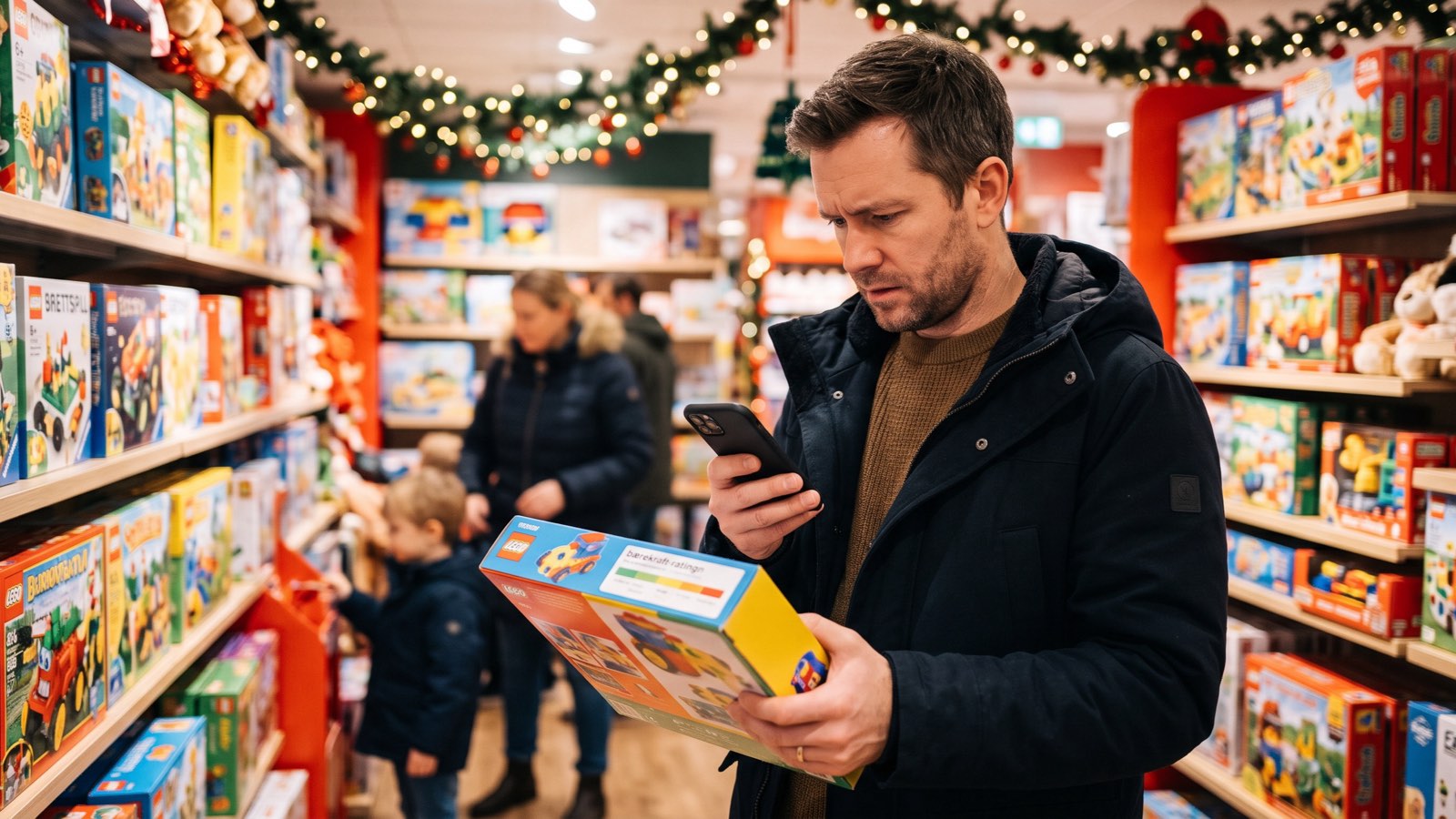
It's three weeks to Christmas, and the list is long. You're standing in a toy store with a box in your hand, wondering whether it's a good choice. Will it actually be played with? Most of us know that feeling.
And most of us have bought a toy that didn't last. The car that was such a hit on Christmas Eve has lost a wheel before New Year. Another present lies at the bottom of the toy box, untouched since. It was cheap, and the child was happy in the moment. But by January, it's rubbish.
A clear conscience isn't about being perfect. It's about a few slightly more conscious choices in the Christmas rush. By a sustainable toy, we mean three things here. It's made of materials that are safe for the child and kinder to nature. It lasts. And it can be passed on to another child. It doesn't have to be expensive.
The hard part is telling the difference in the store. The print on the box is tiny, and toys come with no list of ingredients. Even the Norwegian Environment Agency (Miljødirektoratet) says it is hard to know what toys contain.
Which toys make good, sustainable Christmas gifts?
Think of the toys your children still play with after a year. Often they're the ones that can be thrown on the floor, washed, or fixed when something comes loose. Here are a few places to start:
- Wooden toys. Untreated wood lasts for years. But not everything made of wood is safe just because it's wood. Paint and varnish can contain heavy metals such as lead and cadmium, which is why there are strict limits on how much may leak out.
- Teddies. The filling can be polyester, which is plastic. If you'd rather avoid that, the label is the place to look. Look for cotton or wool both outside and in, and ideally a teddy that can go in the washing machine.
- Pre-loved toys. A toy that has already survived one child has passed the most important test. And nobody had to make a new one.
- Sturdy plastic. Plastic isn't always rubbish. Building blocks made of hard plastic are often handed down, from sibling to sibling and beyond.
If you're buying new, the Nordic Swan Ecolabel is a good sign to look for. It's the official ecolabel of the Nordic countries, and it sets strict requirements for chemicals in toys. The Norwegian Environment Agency recommends the same.
Which brands can you look for?
Some brands are open about what their toys are made of. Here are nine we have checked, the Nordic ones first. Do read about the individual toy too, because the brand alone doesn't tell you everything.
The FSC mark means the wood comes from responsibly managed forests. GOTS is a similar scheme for organic textiles.
| Brand | From | Type | What the brand itself states |
|---|---|---|---|
| Pangea & Motved | Norway | Wood | Handmade by carpenters at Motved. Every part is carved and sanded by hand. Some sets are untreated, others are hand-painted with water-based paint. Sold by the online store Pangea Lek og Lær. |
| Viking Toys | Sweden | Plastic vehicles and toys | Made from sugarcane-based plastic and recycled plastic. The toys can be taken apart and recycled, and can take anything from the sandpit to the dishwasher. |
| Micki | Sweden | Wood | FSC-certified wood since 2019. Some toys are made in its own factory in Gemla, Småland. |
| Konges Sløjd | Denmark | Textiles | Has products in GOTS-certified organic cotton. Look for GOTS on the product itself. |
| Luckyboysunday | Denmark | Soft toys | Knits soft toys in 100 per cent baby alpaca. The filling isn't stated for most of them, and where it is, it's synthetic. Read the label if you want to avoid plastic inside. |
| Grimm's | Germany | Wood | Made from alder, lime, beech and maple, with water-based colour and natural oil. The toys are painted and assembled in Germany. |
| Djeco | France | Games, puzzles and crafts | Has worked towards FSC-certified wood and cardboard since 2010, and has removed the plastic film around its boxes since 2021. Right now you'll find several pre-loved Djeco toys on Loopyty. |
| Le Toy Van | United Kingdom | Wood | 100 per cent FSC-certified wood, and plastic-free packaging in many collections. |
| BiOBUDDi | Netherlands | Building blocks | Plastic made from sugarcane. It's still plastic, but not made from oil. |
We have no agreement with any of these brands, and we earn nothing from mentioning them.
What should you check before you buy?
Three things, and they only take a few seconds:
- Who is selling it? If you buy straight from an online store outside the EU and EEA, the risk is higher, says the Norwegian Environment Agency. Ideally, buy from someone you can go back to if something is wrong.
- Does it have a CE mark and a manufacturer's name? All toys must carry the CE mark, and it must say who made them. If that's missing, it's a bad sign.
- Does it suit the child's age? Take the age label seriously, especially when the child is under three. Small parts that come loose turn up again and again in tests of cheap toys, including the toy industry's own test from 2024.
Wondering about Temu? Several spot checks have found that most of the toys tested from there did not meet the rules. If you're buying for the youngest, it's safer to choose a store in Norway or the EEA.
Does the CE mark mean the toy is approved?
No, and it's a common misunderstanding. The CE mark is the manufacturer's own promise that the toy meets the rules. No authority has approved it, so "EU-approved" isn't right.
The mark is still a minimum. It shows that someone has taken responsibility for the toy. But it says nothing about how long it will last.
How can the sustainability check help?
Many parents have told us they don't know whether a toy is sustainable. That's why we made the sustainability check. It gives you an indication of how sustainable a toy is. It gathers what's written in small print on the box, so it's easier to read and understand. And perhaps it makes you a little more conscious the next time you're standing in front of the shelf.
You take a photo of the whole box, the way you see it on the shelf. An AI then reads the photo and searches the web for the brand and the toy.
- Find Sustainability check in the main menu on loopyty.com.
- Take a photo of the whole box from the front. That way the check sees the brand, the name of the toy and what it looks like.
- Read the answer. The toy gets a sustainability level, shown as low, medium or high. If the check has too little to go on, it says unknown.
- Still unsure? Ask in the store, or choose something else.
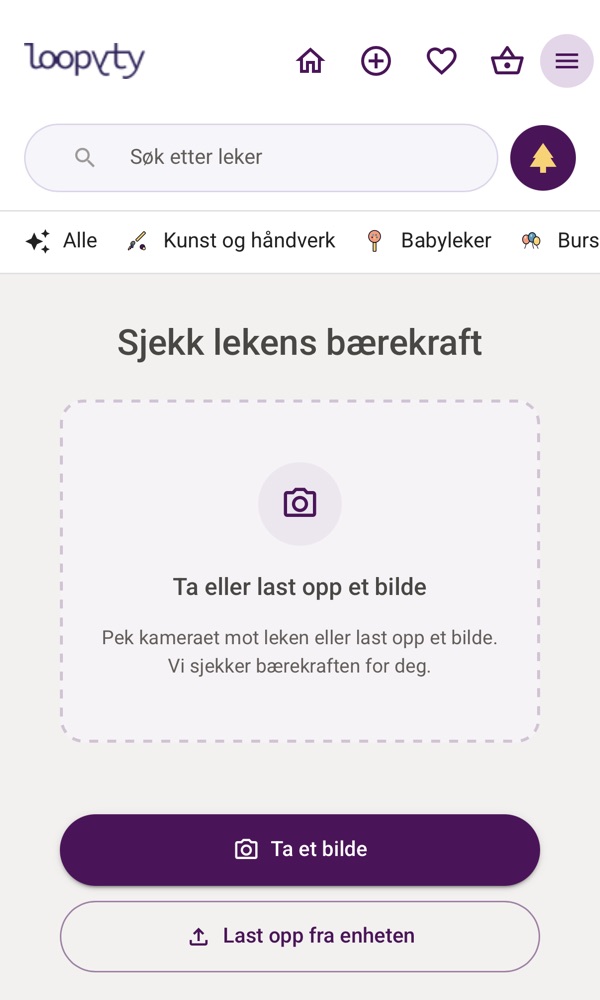
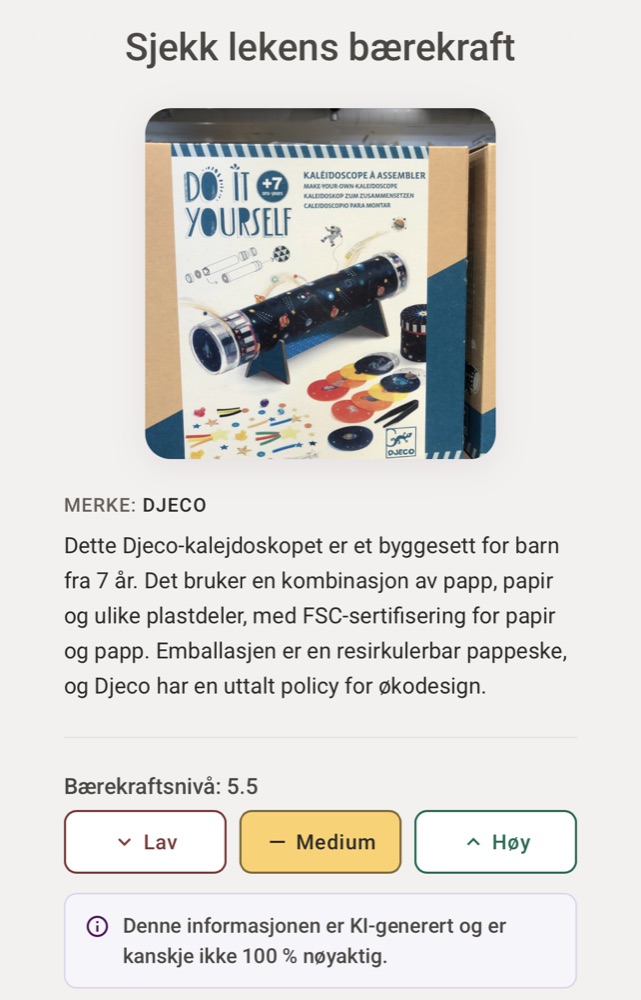
Here we checked a kaleidoscope you build yourself. The check found FSC-certified cardboard, but no visible marks for chemical safety. The result was medium.
The level is based on six areas. It looks at chemicals, durability and repair, and what the toy is made of and what happens when it's thrown away. It also considers the packaging, the manufacturer's sustainability work and how open the manufacturer is about production.
Remember that the check only sees what's in the photo or on the web. It guesses the material from how the toy looks. The answer is made by AI and can be wrong, and without the box many fields will be unknown. Nor is it a safety test.
Are pre-loved toys always sustainable?
Almost always. A pre-loved toy doesn't become rubbish just yet, and nobody needs to make a new one. We also believe more pre-loved buying can make manufacturers think again, and make room for those who make toys that last.
But materials count too, and there's one exception: soft plastic toys made before 2007. That year, the most harmful phthalates were banned in all toys. Phthalates make plastic soft, and some of them can harm health. If you have an old, soft plastic figure from the attic, it's wise to check how old it is before you sell it or give it away.
Otherwise, you can spot most things yourself. Feel for loose parts, and look for cracks.
Thinking of giving a pre-loved toy as a present? Read why children rarely mind that it's pre-loved, and how to make a wish list with pre-loved toys.
Next step
You don't have to do it all. Before you buy Christmas presents this year, go through the toy box with your child. Which toys are still being played with after a year? Look for more like those. One slightly more conscious choice is a good start.
Sources
- Norwegian Environment Agency: Consumer information on chemicals and products (in Norwegian)
- Norwegian Environment Agency: Cadmium and cadmium compounds (in Norwegian)
- Norwegian Environment Agency: Barns kjemiske hverdag (children's everyday chemicals), 2015 (in Norwegian)
- Norwegian Environment Agency: The toy regulations (in Norwegian)
- Norwegian Environment Agency: Safe online shopping (in Norwegian)
- Norwegian Environment Agency: More harmful substances to be banned in toys, December 2025 (in Norwegian)
- Nordic Swan Ecolabel: Requirements for toys (in Norwegian)
- EFTA: Directive 2005/84/EC on phthalates in toys
- Toy Industries of Europe: 95% of toys bought from new online platform break EU safety rules, February 2024
- The brands' and retailers' own pages: Pangea & Motved, Viking Toys, Grimm's, Djeco, Le Toy Van, Micki, Konges Sløjd, Luckyboysunday, BiOBUDDi
Questions and answers
Are wooden toys always better than plastic?
No. It depends on how the toy is made, and whether it lasts. A painted wooden toy without a CE mark is a worse buy than a sturdy toy made of hard plastic.
Are all toys from China dangerous?
No. The country isn't the problem. When you buy straight from a seller outside Europe, there is often nobody in the EU or EEA who is responsible for the toy.
Will it get easier to check toys?
Yes, in time. From 1 August 2030, new toys sold in the EU and Norway must have a digital product passport. It will show what the toy is made of, and who made it. At the same time, PFAS and several bisphenols will be banned in toys. Toys already in the stores before that date can still be sold.