
It's not the children who think second-hand gifts are strange
Second-hand Christmas presents are on their way to being completely normal. But when it comes to toys, it is rarely the children who hesitate. It's us grown-ups.
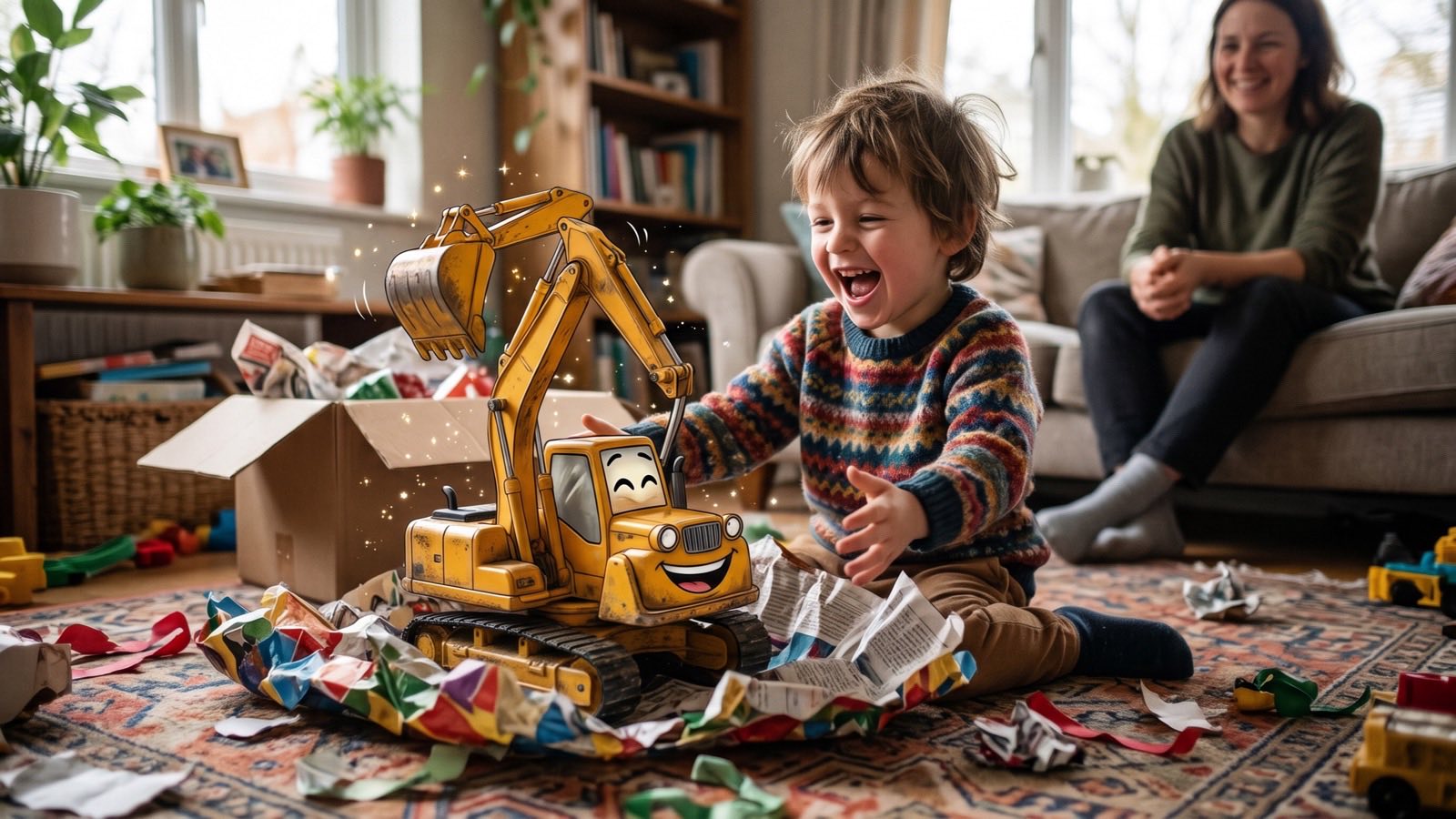
"One weekend, our children had five birthday parties to go to." That is what one of the parents we interviewed told us. Many will recognise it: presents, presents and more presents. And then comes Christmas.
In December, Norwegians spend more than half a billion kroner in toy stores alone, almost three times as much as in an ordinary month (Statistics Norway, 2019). That does not even include online stores and chains that also sell toys. Meanwhile, by our estimate, more than 200 million toys lie untouched in Norwegian homes on any ordinary day. Toys just waiting to be played with again – and to feel brand new to another child.
The taboo is disappearing
For a long time, there was an unwritten rule about Christmas presents: never give anything second-hand. It could look stingy, or as if you had not made an effort.
Now that is changing. Fast Company recently wrote about ThredUp, a large American online store for second-hand clothes. For years, they sold less around Christmas. Now their Christmas sales are growing faster than their sales the rest of the year. In an American survey they commissioned, more than 70 per cent say they are open to giving or receiving a second-hand gift. (Fast Company)
That is about clothes, and it is about the United States. But the article points to why the shift is happening: second-hand has become easy. The online stores look like ordinary stores, and it is easy to find what you are looking for.
This is what we believe will bring more people to pre-loved toys too. A good selection, a good search, and an experience that is personal, joyful and good for the planet. You do not have to be an environmental activist to choose a toy with a story.
Who actually thinks it is strange?
We have talked to around 20 parents about toys, tidying up and presents. Birthdays came up again and again.
Several parents said they would happily ask for second-hand presents for their children. The problem is the people giving them. One parent put it plainly: "Social norms stop me from giving second-hand toys at birthdays." Another tried, but gave up: "It was harder to find something second-hand, so we bought something new instead."
The last obstacle is entirely practical. Buying second-hand often means messages back and forth, bidding and people who never reply. The good toy drowns in all the fuss. That is why we have done away with messages and bidding on Loopyty. You find the toy, and you buy it, just as in an ordinary online store.
It can also be hard to find the right toy in time. With the wish list, a child can wish for things both second-hand and new, and share the list with family and their class. With "Looking for", you post the toy you are searching for, and others who have it can make you an offer.
And the children? One parent said this about their son: "I know he doesn't mind getting second-hand toys, and I'm not sure he even notices whether something is new or old."
To a child, a toy is new when it is new to them. The hesitation sits with us grown-ups, and it is ours to let go of.
Children do it because it's fun – and because it matters
If someone is to give a pre-loved toy for Christmas, someone else first has to let go of it. This is where the children come in.
In the article, ThredUp says something we recognise: many young people buy second-hand without thinking about the climate. They simply see their things as something they can sell on. The effect is sustainable all the same.
This is what we hope to see in children. With their own toy store on Loopyty, they can tidy up, keep track of their "stock", take photos and save towards a goal. The toy store is brand new, but we have tested it with a school class. The children most wanted to set up a store together with friends, and several realised they had many more toys to pass on. It is a perfect activity for children in November: clearing out and making room for what is coming under the tree.
The more toys that are listed now, the more there is to choose from for those who want to give a pre-loved toy for Christmas.
And then everyone wins. The child who sells gets closer to something they dream of. You, the buyer, get a toy with a story, and support a child who may be saving up for something. And the toy no longer lies untouched in a drawer. It gets played with again.
Children today are surprisingly aware of what is good for the planet. One of the children in our test said it straight out: it is good for the environment. Sustainability is part of what children learn at school, and they bring it home with them.
At Loopyty, we want to make passing toys on playfully easy and fun, so that children do it because it is fun, and because they know it matters. There are hardly better reasons.
Try it this year: The Good Christmas Tree
Christmas is also a time to be generous. With a toy you already have at home, you can make Christmas a little brighter for a child you have never met.
With The Good Christmas Tree, we want to show that more people than we think are perfectly happy to receive a pre-loved toy for Christmas. Now complete strangers can give each other pre-loved toys, like a Secret Santa between people who have never met.
From 1 November, you can take part.
- Children post their wishes on the tree, up to three each.
- You grant a wish with a toy you already have at home.
- You pay for the shipping, and the toy is sent to the child.
"Sometimes as parents we feel we have to buy something, and that doesn't feel good," said one of the parents we spoke to. The Good Christmas Tree is an invitation not to.
Give what you have. Don't buy something new to send – that misses the whole point.
Perhaps this year's loveliest present will be a pre-loved toy.
From "used" to "pre-loved"
The clothing industry found out that words matter. "Used" became "vintage" and "second-hand". The same goes for toys.
On Loopyty, we don't describe a toy as "used". We say where it is in its life:
- Never playedNever used
- FlawlessBarely used
- Pre-lovedRegularly used
- WiseWell-worn or vintage
- Fixer-upperNeeds repair
A pre-loved toy has a story, and that story becomes part of the gift. It makes the gift more meaningful, not less. In the American survey, more than half would rather unwrap something unique and second-hand in good condition than something new and mass-produced. A pre-loved toy is chosen with care, both for the child and for the planet.
And is it safe? Take the same care as when you buy new: choose a toy that suits the child's age, and read the description carefully.
Pre-loved toys on Loopyty
See more toys- Pre-loved90 kr
- Pre-loved70 kr
- Pre-loved70 kr
- Pre-loved70 kr
- Pre-loved70 kr
- Pre-loved120 kr


Questions and answers
Do children mind getting second-hand gifts?
Rarely. To a child, a toy is new when it is new to them. It is more often us grown-ups who hesitate.
Are pre-loved toys safe to give as a gift?
Take the same care as when you buy new: choose a toy that suits the child's age, and read the description carefully. On Loopyty, every toy shows its condition, from Never played to Fixer-upper.
How can I give a pre-loved toy for Christmas?
From 1 November you can grant a wish on The Good Christmas Tree with a toy you already have at home. You pay for the shipping, and the toy is sent to the child.