
A wish list for kids: how do you make one?
A wish list is a list of the things you dream about. You make it by writing down your wishes, or taking photos of them. You might not get everything. But it is fun to find out what you really wish for.

Camilla Næristorp
- Founder, Loopyty
- 3 min read
With help from AI tools
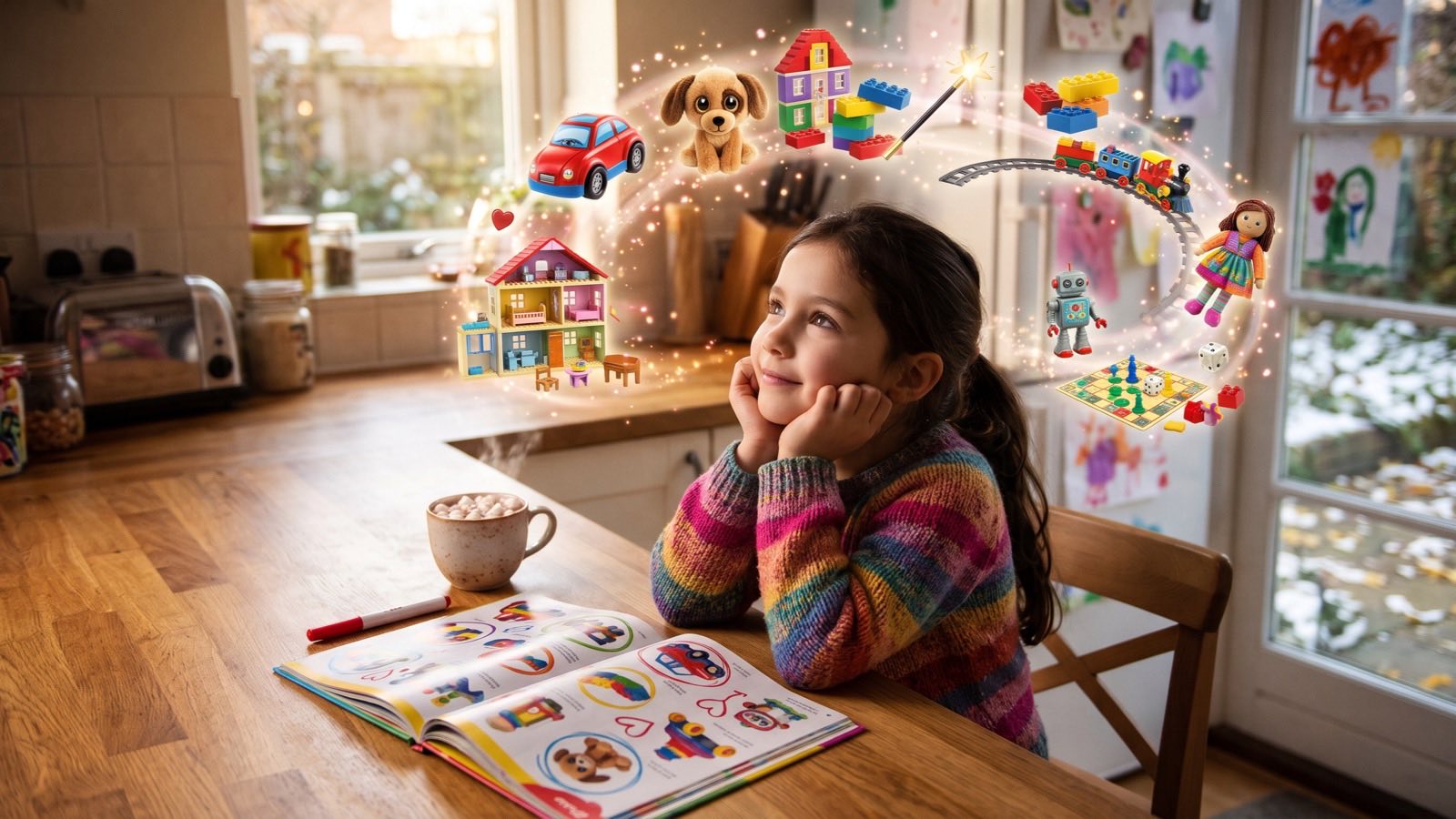
Christmas is coming soon, and it is all right to dream. You can use your wish list for your birthday too.
What is a wish list?
It is a list of things you dream about. It can be toys, books or something you want to do or try.
A wish list is like a treasure map. It shows the grown-ups the way to what makes you happy.
In the old days, children used a toy catalogue that came in the letterbox. They drew rings round the things they liked best. When we talked with parents about toys, several told us about the catalogue they drew rings in when they were little.
How do you make a wish list?
You can write it on a piece of paper. Or you can make it on Loopyty together with your mum, your dad or another grown-up.
The grown-up can share the list with family and friends. Then they can see what you wish for. And then it is easier for them to find something that makes you happy, new or pre-loved.
Where do you find wishes?
Everywhere! Maybe you saw a cool toy at the library. Or at a friend's house. Or in a shop.
Take a photo of the toy, not of people. Ask first if you are at someone's home. Then you and a grown-up can put the photo on the wish list.
Does everything have to be new?
No. Lots of toys have been with another child before. They have a story. It can be just as nice as a new one. And it already exists, so it gets played with instead of lying in a box.
On Loopyty, a toy that has been played with a lot can get the label "Pre-loved".
Did you know?
Children only play with a few of their toys most of the time. A study from England found that, on average, children play with about 5 out of 100 toys. The rest mostly sit still.
Try this
Write five things you wish for on a piece of paper. Wait a week. Read the list again. Which wishes do you still want? Draw a star next to them.
Talk about it at home
Questions and activities for your family, or for you and a friend.
- What is the difference between wishing for something and needing it?
- Have you ever been given something you didn't wish for? What did you do with it?
- Would you be just as happy with a pre-loved toy as a new one? Why, or why not?
- What do you wish for that money can't buy?
Activities you can do on your own or with a friend:
- Tidy your room. Find the toys that suit younger children best. Put them in a box of their own. Show the box to a grown-up. Together, work out where the toys should go next.
- Make a card. Draw or write a thank-you card to someone who gave you a present last Christmas or on your birthday.
For teachers who teach sustainable development: the questions and activities also work in the classroom, in science, social studies and religion and ethics (Udir: Sustainable development, in Norwegian).
Sources
- British study of children's toys (2010), reported by Time for Kids: children play with about 12 of 238 toys.
- Loopyty: conversations with around 40 parents about toys and presents, since we started working on Loopyty.
- The Norwegian Directorate for Education and Training: Sustainable development, an interdisciplinary topic in the curriculum (LK20) (in Norwegian).